The Artist
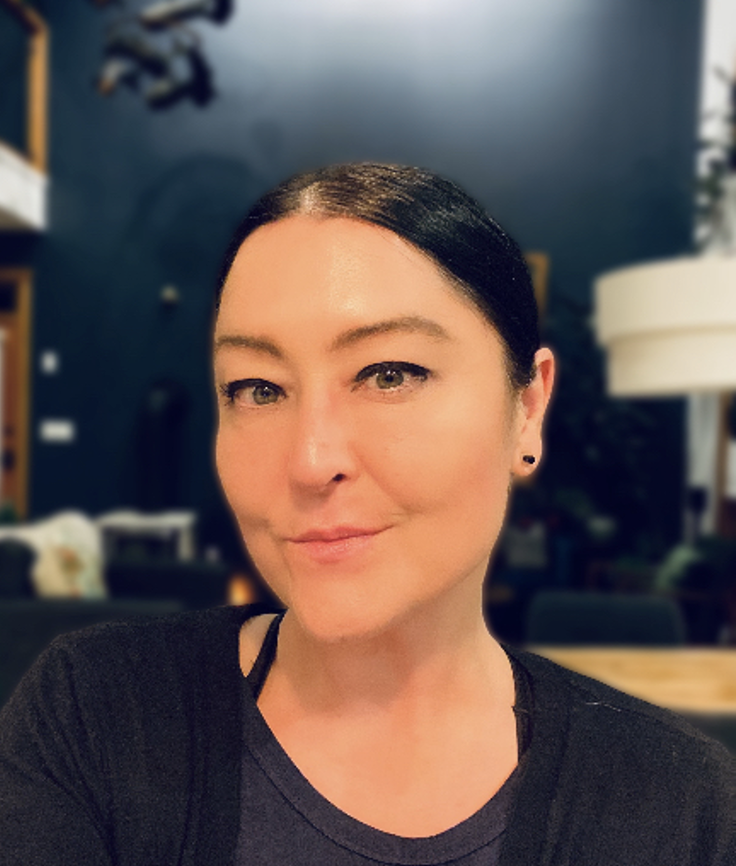
About Janna
Dr. Janna Popoff is a Canadian Doukhobor, artist, and academic born and raised in British Columbia’s West Kootenay region. The landscape and cultural history of her upbringing remain central to a practice that encompasses Doukhobor narratives, landscapes, and still life. Her work brings historical awareness and scholarly inquiry to an enduring fascination with paint, its material possibilities, and its capacity to give form to memory and feeling. Her oil paintings have been exhibited nationally and internationally.
Doukhobor Paintings
Janna’s Doukhobor paintings emerge from a history intimately known through family and community. She grew up immersed in stories, songs, spiritual practices, literature, and agricultural traditions, inheriting a culture sustained by knowledge, collective responsibility, and deeply held convictions. Her grandparents were arrested and imprisoned for protesting in defence of their beliefs, and her aunts were removed from their family and placed in foster homes. This history informs her attention to the courage of people who stood by their principles and the consequences that continued through subsequent generations.
The passing of older generations brought a growing awareness of how much cultural knowledge resides in living memory. Her paintings developed partly in response to that vulnerability, offering a way to revisit inherited stories and consider what they mean in the present.
Drawing on archival photographs, oral histories, Doukhobor literature, and family memory, Janna creates works in which historical events, imagination, and personal experience coexist. She is particularly drawn to women’s lives: their labour, spiritual authority, relationships, and individual character. Her paintings also engage with the complexities of migration, communalism, pacifism, persecution, government intervention, and the Sons of Freedom.
Her connection to this history allows for both intimacy and critical reflection. She considers how convictions shape a life, how communities negotiate disagreement and change, and how the meaning of an inheritance shifts across generations. Through painting, she keeps these histories present without settling their contradictions or reducing them to a single account.
Painting Practice
Painting has been a lifelong practice for Janna. Alongside her Doukhobor work, landscapes, cake paintings, and other subjects provide a space for sustained exploration of colour, light, and form. Working primarily in oil on paper, canvas, and wood, she also uses cold wax and epoxy in selected works to explore texture, depth, and luminosity.
Her paintings develop through successive layers and revisions. Forms emerge, colours alter one another, and traces of earlier decisions remain within the surface. She is drawn to the relationship between the physical substance of paint and the ethereal qualities it can evoke, allowing atmosphere and feeling to arise through the material.
The demands of painting remain a source of fascination. Familiarity with the medium brings greater sensitivity to its possibilities, while its unpredictability continually tests her intentions. This balance of experience and discovery sustains her love of the practice. She believes paintings acquire further meaning through their presence in the world, entering into the spaces, memories, and daily lives of those who live with them.
Education and Scholarship
Janna earned a Bachelor of Fine Arts in Oil Painting and Art History from the Nova Scotia College of Art and Design. She later completed a Master of Education in Adult Learning and Global Change at the University of British Columbia and a PhD in International and Comparative Education at Beijing Normal University, where she studied on a full academic scholarship.
Her research draws on feminist theory, decolonial methodologies and critical theory, with an emphasis on democratic inquiry and narrative and visual methodologies (photovoice). She examines how institutions confer authority on certain forms of knowledge, how lived experience is interpreted, and whose perspectives are excluded. Central to her approach is a commitment to democratizing knowledge production and recognizing participants as collaborators with agency over the representation of their lives.
Her approach is grounded in an ethics of care, alongside conscious listening, cultural humility, and responsibility to the people and communities involved. She understands ethical research as an ongoing relationship that requires reciprocity, accountability, and attention to differences in power. These commitments inform her critique of extractive academic practices and her pursuit of more collaborative forms of inquiry.
Lastly, her research has examined how emotional regulation and dysregulation can reveal systemic barriers within educational institutions, connecting personal experience to broader questions of belonging, recognition, and equitable access. These concerns also inform her studio practice, where questions of memory and representation carry a similar responsibility: to attend closely to lived experience and to consider what is at stake in giving it form.